
2001 Land Rover Freelander Servcie Manual
This document has been issued to support the Freelander model range 01MY. The information contained within this document relates to the features and specification of this model. Every effort has been taken to ensure the information contained in this document is accurate and correct. However, technical changes may have occurred following the date of publication. This document will not necessarily have been updated as a matter of course. Therefore, details of any subsequent change may not be included in this copy The primary function of this document is to support the Service Training programme. Itshould not be used in place of the workshop manual. All applicable technical specifications, adjustment procedures and repair information can be found in the relevant document published by Rover Group Technical Communication.
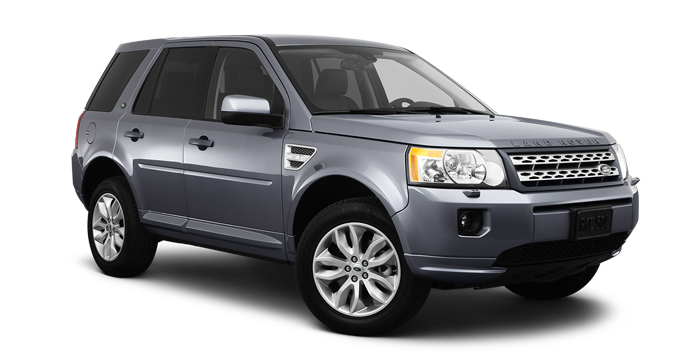
Land Rover Freelander Repair Manual
In 1997 to much acclaim Land Rover launched Freelander. This new model range saw a significant departure from the traditional Land Rover engineering format and carried the Land Rover brand into the medium and small segments of the four wheel drive leisure market. Again,Land Rover has captured the leading position within the market segment and continues to develop its position.
Freelander was something new from Land Rover. Designed to be adaptable and accessible,broadening the appeal of the Land Rover Brand. It featured many innovative solutions designed to create car-like ride and handling for enjoyable and adventurous driving, both on the road and off it. Freelander is modern and contemporary, without denying its Land Rover heritage. A range of body styles are available: the three door comes in either Softback or Hardback versions and there is also a five door Station Wagon.
The key features of the vehicle which are carried over to Freelander 2001 model year are as follows:
- All round independent suspension
- Power assisted rack and pinion steering
- Permanent four wheel drive
- Four channel ABS
- Electronic Traction Control.
- Hill Descent Control
- Integrated Body/Chassis design
- Use of engineering polymers and other advanced materials
- Driver and passenger airbags
- Pyrotechnic front seat belt pretensioners
- Three-point centre rear seat belt (where three rear seat belts fitted)
- Sophisticated integrated vehicle security system
- 1.8 litre K Series petrol engine
- Intermediate reduction drive
- Wide range of accessories
Window lift system
New features of the window lift system include rear electric windows; a one-shot down function on the driver's window and a timer delay function allowing the electric windows to be operated for a predetermined amount of time after the ignition has been switched 'off'. Five door derivatives have an isolator switch located in the centre console for the rear side door windows.
The driver's window one shot facility is controlled by a window lift ECU which is located on the driver's side 'A' post, level with the lower edge of the fascia. If driver's door window switch is pressed for 0.2 seconds or less the window will be driven down to the full extent of its travel.
The window lift switches are located in a new position on the centre console providing easier access and operation.
The central control unit controls the power feed to the window lift relay, located inside the passenger compartment fusebox. The window lift relay supplies power to the driver's window lift ECU and to the other electric window circuits directly. The output is enabled by the CCU with the ignition 'on' (position II). When the ignition is turned 'off' a timer function of the CCU enables the front and rear electric windows to be operated for forty seconds after ignition 'off'.
The major change to Freelander 2001 model year is the introduction of new powertrain derivatives. The familiar K1.8/PG1 has been modified to meet ECD 3 legislation and will be supported by the new 2.5 litre KV6 engine with Jatco automatic steptronic transmission. The L series 2.0 litre diesel engine is replaced by the BMW common rail M47R engine. The M47R is available with both the Jatco automatic transmission and a new manual transmission the Getrag 283.
Other feature changes include:
- Revised anti-lock braking system (ABS) fitted as standard with hill descent control (HDC),electronic traction control (ETC) and electonic brakeforce distridution (EBD)
- Full controller area network (CAN) bus system
- Cruise control (both petrol and diesel automatic derivatives)
- New instrument pack
- New immobilisation system - (EWS-3D)
- HEVAC upgrades including variable displacement compressor, pulse width modulated(PWM) cooling fans and air conditioning pollen filter
- Heated seats with lumbar adjust available on driver's seat
- Electric rear windows
- One shot down on driver's window
- Revised and improved audio system including steering wheel switches
Environmental Box
The environmental 'E' box is designed to keep the temperature of the components contained within it at the same temperature as the cabin temperature. Air is circulated from the cabin through the 'E' box and back into the cabin. The 'E' box is fitted to Freelander KV6 and M47R derivatives and enables there use in +50°C markets.
The following components are contained within the box:
- Engine control module
- Automatic transmission control unit (if fitted)
- Glow plug relay (diesel only)
- Temperature sensor
The E-box is a container that provides a protected environment for the ECM, the glow plug relay and the EAT ECU. An open hub, centrifugal fan powered by an electric motor ventilates the E-box with air from the passenger compartment. Air from the E-box is directed back into the passenger compartment. The ventilating and exhaust air is routed between the passenger compartment and the E-box through plastic ducting and corrugated rubber hoses. Operation of the cooling fan is controlled by a thermostatic switch in the E-box. The thermostatic switch receives a power feed while the ignition switch is in position II. If the temperature in the E-box reaches 35°C (95°F) the thermostatic switch closes and connects the power feed to the fan, which runs to cool the E-box with air from the passenger compartment. When the temperature in the E-box decreases to 27°C (80°F), the thermostatic switch opens and stops the fan. To prevent the fan seizing up in cold climates, where it may not operate for long periods of time, the fan also receives a power feed from the starter circuit so that it runs each time while the engine is cranked.
Land Rover Freelander Body modifications
The following list identifies new features that are available with Freelander 2001 MY. Availability will be market dependent for a number of the features:
New features
- KV6 front end extended with unique bumper covers
- Shift interlock (JATCO)
- Rear seat belt automatic locking retractors
- Front seatbelt load limiters
- Front seat belt buckle warning
- Dark tinted privacy glass
- Powerfold door mirrors
- Illuminated sunvisor
- V6 badge
- New range of alloy wheels
Introduction to Bus technology
Technological advancement in vehicle electronics has led to many changes and improvements in vehicle electrical systems. Vehicles are now fitted with systems which, although complex in functionality, are user friendly and very reliable. Electronic control units are used to control and monitor the operation of the systems they are fitted to and are increasingly being used to transfer information to other system ECU's via bus technology.
An ECU is populated with solid state components, the capacity of which is matched to the complexity of the system it has to control. ECU's receive input signals corresponding to the current state of the system under its control. The signals to the ECU come from various sensors and switches and these inputs dictate the outputs the ECU's send to the actuators of the system.
The powertrain electrical architecture of Freelander 2001 has been designed to exploit the potential of its technological advances. Rather than having an ECU dedicated to its system and unaware of the operation of other systems, the powertrain systems around Freelander 2001 are linked together. The ECU's are linked to each other via the CAN-Bus-system, allowing communication and exchange of information.
Related Manual
Land Rover Freelander 2005 On-Board Diagnostics
Land Rover Freelander Overhaul Manual L-Series Diesel Engine
Land Rover Freelander Overhaul Manual K-Series Engine
Land Rover Freelander 1998 Body Repair Manual